African countries need to address gaps in cross-border payments, customs and infrastructure if the continent is to realise the full commercial potential of the African Continental Free Trade Area (AfCFTA).
AfCFTA Secretariat Secretary-General Wamkele Mene said businesses would only benefit from the continental trade agreement if the systems supporting cross-border commerce are efficient and accessible.
Mene said national policies need to be better aligned, while customs processes should be modernised and businesses enabled to make cross-border payments using local currencies.
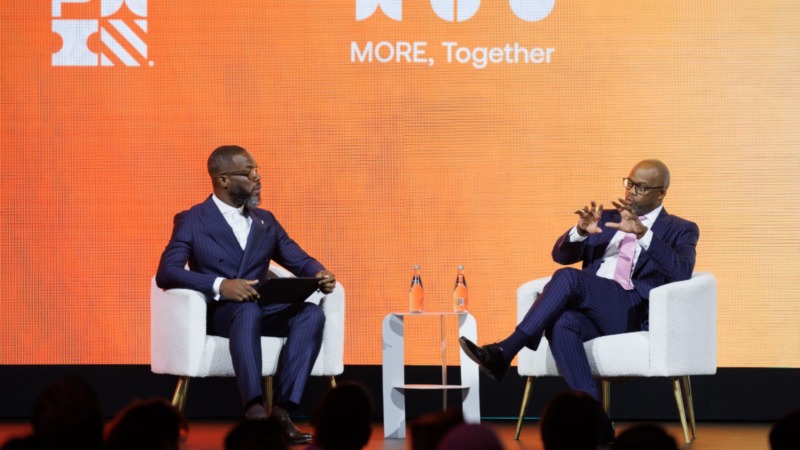
He was speaking at the Project Management Institute’s Global Summit Series in Cape Town during a discussion with PMI Managing Director for Sub-Saharan Africa George Asamani.
Mene said fragmented financial systems were adding to the cost of doing business within Africa.
He cited transactions between businesses in Ghana and Kenya, where companies may need to convert their currencies through a third currency such as the US dollar.
The currency conversion costs associated with such transactions across the continent are estimated at about US$5 billion annually, Mene said.
He identified the Pan-African Payment and Settlement System (PAPSS) as one of the mechanisms that could help reduce the cost.
Developed by Afreximbank in collaboration with the AfCFTA Secretariat, PAPSS allows businesses to make cross-border payments in local currencies, reducing dependence on third currencies.
Mene said improving trade infrastructure would also require governments to ensure domestic policies are consistent with continental commitments.
He noted that infrastructure, digital systems and customs processes need to work together if businesses are to take advantage of the larger African market.
The AfCFTA chief also acknowledged concerns over the effect of market liberalisation on domestic industries.
He said the agreement provides safeguards for infant industries and that governments could support businesses and sectors facing disruption as markets become more open.
Mene called for greater investment in project preparation and trade infrastructure, alongside digital investment.
He pointed to the Digital Trade Protocol as an avenue for creating conditions for investment in emerging technologies and data centres.
Asamani said Africa also needed more professionals with the skills to manage projects involving multiple institutions and countries.
He said stronger project management capabilities would support the delivery of infrastructure, digital systems and more effective public institutions.
Mene said the success of AfCFTA would ultimately depend on whether businesses can access new African markets at lower costs and with fewer administrative hurdles.
The discussions were held under the summit theme, “Africa Delivers M.O.R.E. Together.”